
Reimagining an Invisible Industry
The Details That Matter
On any given night in Dallas–Fort Worth and across the nation, thousands of hotel guests slip into crisp sheets, dry off with plush towels and head to dinner without ever thinking about what makes that seamless comfort possible.
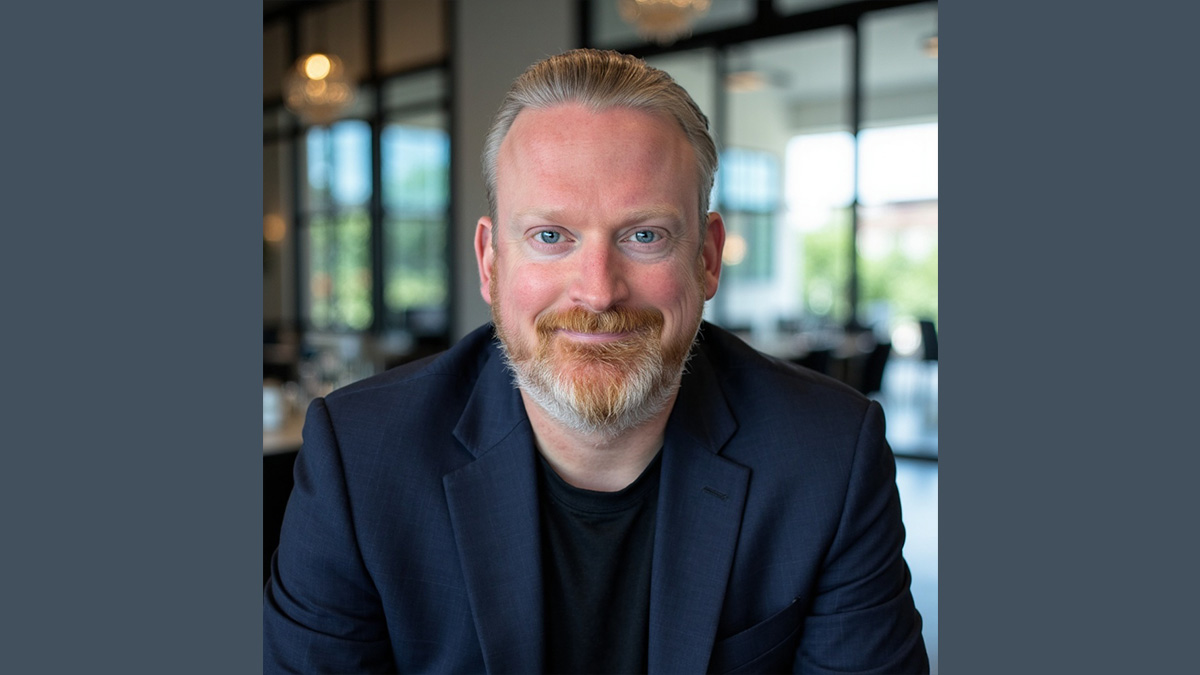
Mark Nordick does think about it.
Because behind every bath towel, pool towel and restaurant napkin is a hidden vulnerability that Nordick built his next chapter on solving.
A graduate of the University of North Texas, Nordick (’14) began his career in the corporate world — IBM, global leadership roles, company turnarounds, successful exits. He led organizations of more than 600 employees. He knew how to scale. He knew how to deliver. But somewhere along the way, the work started to feel different.
“The corporate world can get very focused on outputs,” he says. “Revenue. Margins. Growth charts. I wanted to get back to the inputs. The people, the culture, the things that create the results.”
That desire didn’t come from burnout. It came from clarity. He didn’t want to stop leading. He wanted to build something where he could see the impact more directly.
That opportunity surfaced through a familiar connection: Don Ward, a fellow UNT alum and former colleague who built Laundris from the ground up after recognizing a costly inefficiency few were paying attention to. While operating a commercial laundry facility, Ward saw hotels absorbing significant losses simply because they lacked visibility into their linen inventory. He identified the problem and began building the solution. Nordick saw both the ingenuity and the potential for scale, and joined Ward to help grow the vision into a standalone technology company.
Hotels were losing significant money for a simple reason: they didn’t know where their linens were. Across the Hospitality industry, millions of towels, sheets and uniforms disappear or are prematurely replaced each year simply because operators lack visibility into their linen inventory. Much of the linen inventory is often tracked by weight or handwritten counts. Towels disappear. Sheets are over-purchased “just in case.” Restaurant napkins are mistakenly thrown away. When numbers don’t add up, blame travels faster than data.
It’s an invisible leak in an industry built on precision.
Ward recognized the problem years ago while operating a commercial laundry facility. Nordick recognized how quickly that problem could scale.
Together, they built a system that replaces guesswork with visibility. Using RFID-enabled linens and a cloud-based software platform, Laundris gives hotels and commercial laundry operators real-time visibility into linen inventory across properties, transforming what was once manual estimation into measurable operational data.
In one case, a hotel believed its laundry partner had lost $46,000 worth of restaurant linens. The data told a different story: staff had been throwing napkins into the trash instead of the linen bin. For Nordick, moments like that are the point — not just the savings, but the clarity.
When Nordick stepped into the CEO role, Laundris had just transitioned from being part of a physical laundry operation into a standalone software startup. It was lean, with seven employees each wearing multiple hats. The operations lead also handled HR and accounting oversight. The product leader managed engineering and implementation.
Everyone was stretched.
After years of directing large enterprise teams, Nordick found himself doing the hands-on work again.
“At a big company, you set direction and others execute,” he says. “Here, if something needs to get done, you jump in.”
It was unfamiliar at first. Then it became invigorating.
“It’s like mowing the lawn,” he says with a laugh. “You might not love every minute of it. But when you’re done, you see exactly what you built.”
A Foundation That Lasts
Nordick’s own path to UNT wasn’t linear. He began at community college while his career accelerated ahead of his degree. For nearly a decade, he worked internationally before deciding to return and finish what he started, enrolling in UNT’s online program long before virtual learning became standard.
“I always joke that I went to college for 15 years,” he says.
What stayed with him wasn’t just the diploma. It was the discipline. Communication. Problem-solving. The ability to take an assignment and figure out how to deliver it.
“Get brilliant at the basics,” he says. “If you can’t communicate, if you can’t think critically, you won’t go very far.”
But foundations alone aren’t enough. Creativity and the willingness to solve a problem without being handed the answer matters. It’s a philosophy that mirrors UNT’s emphasis on degrees of value that don’t just see students graduate but equip them with the tools to thrive long after they leave campus.
Nordick believes universities and private industry must work together to keep those tools relevant. Technology evolves quickly. Artificial intelligence has rapidly moved from theory to practical application. Today, it is increasingly embedded in operational workflows, helping companies analyze data and make better decisions. Strong partnerships, internships and real-world exposure ensure students build adaptability while they learn theory.
“Universities help people figure out how to problem-solve,” he says. “That’s critical, because artificial intelligence can’t replace human judgment and creativity.”
Building What Comes Next
As Laundris scales, Nordick remains focused on three priorities: people, culture and innovation.
Train employees, even if they might leave. Build a culture strong enough that they won’t want to. Reinvest in the product rather than chasing short-term financial wins.
“The outputs take care of themselves if you focus on the inputs,” he says.
It’s a lesson shaped by corporate experience and sharpened by startup reality.
What excites him most about this chapter isn’t an exit strategy or valuation milestone. It’s the unknown. At a small company, ideas move quickly. A customer surfaces a challenge. The team listens. The product evolves. There is no bureaucracy to slow the response.
“Big companies can miss things,” he says. “We’re small enough that if we hear something, we can execute on it.”
In an era defined by accelerating change, Nordick believes the next generation of leaders will need more than technical fluency. They will need the skills and confidence to step away from something comfortable in order to build something meaningful.
It’s the kind of mindset strengthened at UNT, and one he now applies in an industry few people ever think about.
Tonight, somewhere in a hotel room where everything feels effortless, that mindset is quietly at work, proving that when you finally track what everyone else overlooks, you do more than protect revenue.
You build something smart.